



The Divisional Court (Holgate LJ, Farbey J) has handed down judgment in R (Thompson and Carlo) v Commissioner of Police of the Metropolis (EHRC intervening) [2026] EWHC 915 (Admin).
The claim concerned the use by the Metropolitan Police of live facial recognition (“LFR”), which involves comparing the faces of those who walk past a deployment of LFR cameras with police watchlists, primarily in order to locate persons the police need to find.
The Claimants were, respectively, an individual who was stopped at a deployment of LFR technology, and the Director of Big Brother Watch, a campaigning organisation. They alleged that the use of LFR in London was not “in accordance with law” or “prescribed by law” for the purposes of Articles 8, 10 and 11 of the European Convention on Human Rights (“ECHR”). In particular, it was alleged the Commissioner’s policy framework for LFR deployments contained insufficient safeguards against the arbitrary selection of deployment locations, and so lacked the quality of “law” for the purposes of the ECHR.
The claim was dismissed on all grounds. The Court found that, “[i]n the context of promoting law and order in a large metropolis, the Policy provides the claimants with an adequate indication of the circumstances in which LFR will be used and enables them to foresee, to a degree that is reasonable in the circumstances, the consequences of travelling in an area of London where LFR is in use” ([214]). It concluded that the Policy contains “adequate and lawful constraints on where LFR may be deployed” [217].
The judgment will be of interest to practitioners in the fields of both privacy and public law. It contains the first discussion of the use of AI in public authority decision-making since R (Bridges) v Chief Constable of South Wales Police (Information Commissioner and others intervening)[2020] EWCA Civ 1058, a previous case in which a different police force’s use of LFR was found unlawful.
The judgment is available here.
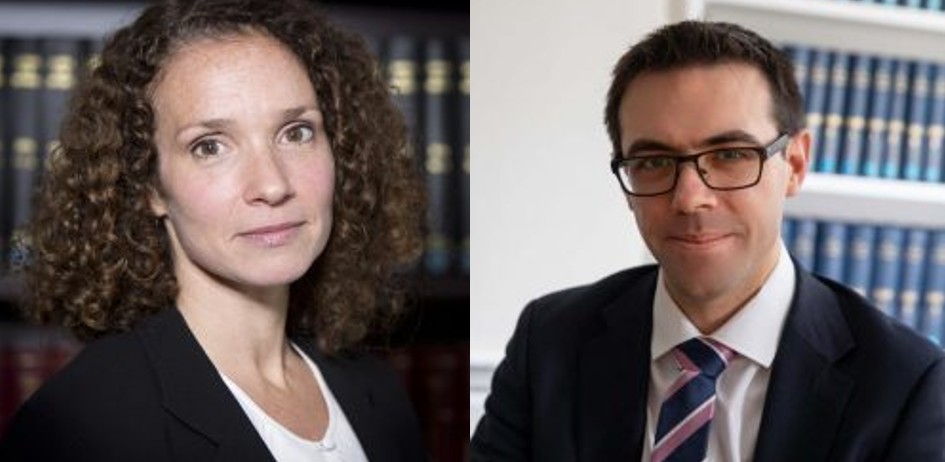
Anya Proops KC and Raphael Hogarth represented the Commissioner with Robert Talalay of 5 Essex Chambers, instructed by Rex Nicholls and Chloe Cambridge at the Metropolitan Police Service.